


Screws: Types, Uses, Materials, and How to Choose the Right One for Your Project
Screws: Types, Uses, Materials, and How to Choose the Right One for Your Project
Screws are one of the most versatile fasteners used across a wide range of applications. Whether you are assembling furniture, working on home improvement, or constructing machinery, choosing the right screw ensures a secure and lasting result. This comprehensive guide covers the different types, materials, and sizes of screws, along with practical tips on how to choose the right one for your project.
1. What Are Screws?
Definition of a Screw
A screw is a type of fastener characterized by a helical ridge (thread) wrapped around a central shaft. It is used to hold objects together by rotating it into a corresponding thread in a material or nut.
The Basic Function of Screws: How They Work
Screws work by converting rotational motion into linear force. As the screw is turned, the threads engage with the material, creating a strong bond by drawing the parts together.
The History and Evolution of Screws
Screws have been in use since ancient Greece and were initially hand-made using simple tools. Over time, industrial processes have automated screw manufacturing, making them essential in modern construction, engineering, and daily life.
When to Use a Screw Instead of Other Fasteners (Nails, Bolts, etc.)
Screws are ideal when a strong, secure fastening is required, especially when joining materials that need to be disassembled later. Unlike nails, screws have threads that provide better holding power, and unlike bolts, they often do not require nuts.
2. Common Types of Screws
Wood Screws: Designed for Use with Wood
Wood screws have a sharp point for easy insertion into wood and coarse threads for a strong grip. They are often used in furniture construction and woodworking projects.
Machine Screws: Used with Metal Parts and Machinery
Machine screws are designed for use with metal components, often requiring a nut to complete the fastening process. They come in various sizes and threads.
Sheet Metal Screws: Fastening Thin Metal Sheets Together
These screws are designed to attach thin metal sheets and are often used in HVAC, roofing, and electrical applications.
Self-Tapping Screws: No Need for a Pilot Hole
Self-tapping screws have a pointed tip that allows them to cut their own threads into the material, eliminating the need for a pilot hole.
Lag Screws: Heavy-Duty Screws for Larger Projects
Lag screws are large screws used to fasten heavy materials, such as wood or metal, and require a pre-drilled hole.
Specialty Screws: Drywall, Concrete, and Other Specific Types
Specialty screws, such as drywall or masonry screws, are designed for specific materials like drywall, concrete, or brick.
3. Materials Used for Screws
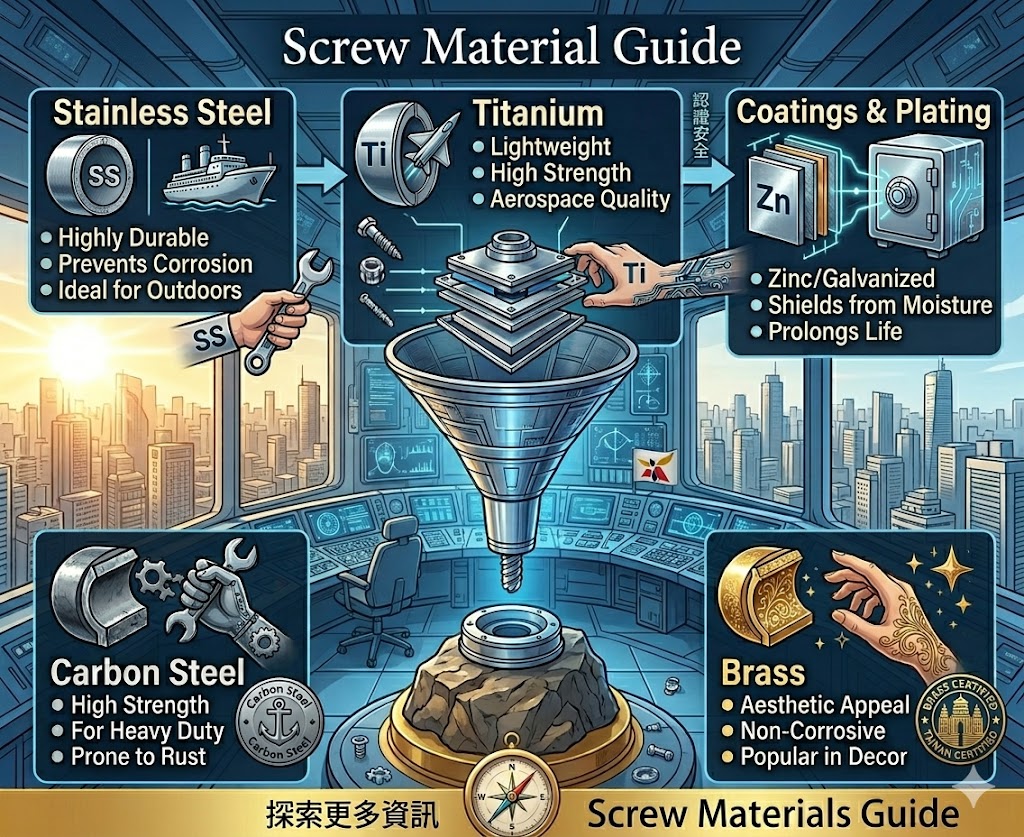
Stainless Steel Screws: Durability and Corrosion Resistance
Stainless steel screws are highly durable and resistant to rust and corrosion, making them ideal for outdoor or marine environments.
Zinc-Plated Screws: Affordable and Corrosion-Resistant
Zinc-plated screws offer corrosion resistance at a lower cost and are suitable for most indoor applications.
Brass Screws: Aesthetic Appeal and Non-Corrosive
Brass screws are non-corrosive and have an attractive gold-like appearance, making them popular in decorative applications.
Titanium Screws: Lightweight and Strong
Titanium screws are lightweight, strong, and resistant to corrosion, commonly used in aerospace and high-performance applications.
Carbon Steel Screws: Strong and Suitable for Heavy-Duty Applications
Carbon steel screws are known for their strength and are suitable for heavy-duty applications, although they may be prone to rust.
Coatings and Plating: How They Affect Performance and Longevity
Coatings like zinc or galvanized plating increase a screw's lifespan by protecting it from environmental elements, especially moisture.
4. How to Choose the Right Screw for Your Project
Determining the Correct Length and Diameter
Choose the screw length and diameter based on the material thickness and the required depth of insertion.
Choosing the Right Head Style: Flat, Round, Hex, and More
Different screw head types, like flat, round, or hex, are designed for different applications. Choose the head style that suits your project needs, such as for use with screwdrivers or wrenches.
Choosing the Right Drive Type: Phillips, Slotted, Torx, etc.
Screws come with different drive types such as Phillips, slotted, and Torx. Select the one that fits your tools and the type of fastening you need.
Material Considerations: Choosing the Right Material for the Job
The material of the screw affects its strength, resistance to corrosion, and application. For outdoor or marine applications, consider stainless steel or brass screws.
Thread Type: Coarse vs. Fine Threads
Coarse threads are ideal for soft materials like wood, while fine threads are better for harder materials like metal.
Understanding Load-Bearing and Torque Requirements
Ensure the screw you choose can handle the required load and torque. For heavy-duty applications, consider lag screws or machine screws.
5. Common Screw Sizes and What They Mean
Understanding Screw Gauge and Thread Count
Screws are classified by gauge (thickness) and thread count (threads per inch). The size affects how the screw fits into materials and determines its holding strength.
How to Read Screw Size Markings (e.g., 8-32, 10-24)
Screw size markings typically indicate the gauge and the number of threads per inch (e.g., 8-32 means a #8 gauge screw with 32 threads per inch).
How to Select the Correct Size for Different Materials
The size of the screw should match the material’s thickness and density. For soft materials, choose larger diameter screws with coarse threads.
Screw Size Conversion Chart: Inches to Millimeters
Understanding the screw size conversion between inches and millimeters is useful when purchasing or selecting screws for international projects.
6. How to Install Screws Correctly
Pre-Drilling Holes: When to Use a Pilot Hole
For certain materials, pre-drilling a pilot hole can prevent the screw from splitting the material and ensure a more secure fit.
Using the Right Tools: Screwdrivers, Drills, and Impact Drivers
Choose the right tool for the job. A screwdriver is perfect for manual applications, while an impact driver is better for high-torque tasks.
Proper Technique for Driving Screws: Avoiding Stripping and Damage
Use the correct size driver bit to avoid stripping the screw head, and apply consistent pressure to ensure proper insertion.
How to Ensure Proper Tightening Without Over-Torquing
Do not overtighten the screw, as this can strip the threads or damage the material. Tighten just until secure.
7. Common Problems with Screws and How to Fix Them
Stripped Screws: What Causes Them and How to Fix Them
Stripped screws occur when the driver slips or the screw is overtightened. Use a screw extractor tool or rubber bands to remove stripped screws.
Screws Not Holding Tight: Why It Happens and How to Address It
If screws don’t hold, check the material or thread type. You may need to use a longer screw or a different thread pitch.
Broken or Snapped Screws: Causes and Solutions
Broken screws can occur if excessive torque is applied. Use a higher-quality screw for heavy-duty applications, and avoid overtightening.
Rusted Screws: Prevention and Treatment
To prevent rust, select corrosion-resistant screws (e.g., stainless steel) or apply a rust-resistant coating.
8. Screw Applications and Uses
Screws in Woodworking: How to Use Screws for Wood Projects
Wood screws are designed for use with wood, and their coarse threads provide a strong hold. Pre-drilling pilot holes can help prevent wood from splitting.
Screws in Metalworking: Fastening Metal Parts Together
Machine screws are used for fastening metal parts and are often paired with nuts for secure attachment.
Screws in Construction: How to Secure Large Structural Pieces
Lag screws are ideal for heavy-duty construction projects, such as securing large beams or framing materials.
Screws in Electronics: Small and Specialized Screws for Devices
Electronics screws are typically small, with fine threads, designed for fastening delicate components without damaging them.
Screws in DIY Projects: Simple Fastening Solutions for Home Improvement
DIY enthusiasts often use screws for everything from shelving to furniture assembly, providing a durable, long-lasting hold.
9. Where to Buy Screws
Online Retailers and Craft Stores That Sell Screws
You can purchase screws from online retailers like Amazon or specialized hardware stores. Many craft stores also offer decorative screws for DIY projects.
Custom Screws: Finding Niche or Custom Screws for Specific Jobs
If your project requires specific screw types, custom screw manufacturers can help you find or create the right screws for the job.
Pricing and Options for Bulk Orders or Custom Orders of Screws
Buying screws in bulk can save money, especially for larger projects. Some manufacturers offer discounts for bulk orders.
The Best Websites for Designing and Ordering Custom Screws
Some websites allow you to design and order custom screws for unique applications, offering specific materials, sizes, and finishes.
Conclusion
Screws are a vital part of nearly every construction, woodworking, and DIY project. With a vast array of types, sizes, and materials to choose from, it’s important to understand your project needs before selecting the appropriate screws. By considering factors like thread type, material, size, and application, you can ensure that your screws will provide strong, reliable fastening, contributing to the success and durability of your project.
Common QA
Q1: What is the difference between a screw and a bolt?
A: The main difference is that a screw has threads that can be driven directly into a material, while a bolt typically requires a nut to fasten parts together. Screws are used for smaller, more precise fastening, while bolts are used for heavier-duty applications.
Q2: How do I choose the correct screw size for a project?
A: The correct screw size depends on the material you're working with, the thickness of the material, and the type of fastening required. Use a screw size guide or chart to help you choose the correct length, diameter, and thread type.
Q3: What is a self-tapping screw?
A: A self-tapping screw has a special tip that allows it to cut its own thread as it is driven into material. This eliminates the need for a pilot hole, making them ideal for use in sheet metal and some plastics.
Q4: How can I prevent screws from rusting?
A: To prevent rust, choose screws made from stainless steel, brass, or coated screws that are designed to resist corrosion. You can also apply a rust-preventative coating or keep screws away from moisture.
Q5: Can screws be used in concrete or brick?
A: Yes, there are specialized screws, such as masonry screws, designed to be used in concrete, brick, or stone. These screws have a special thread design that allows them to anchor into solid materials.