


Heavy Duty Door: Types, Benefits, and Factors to Consider When Choosing the Right One
What is a Heavy Duty Door?
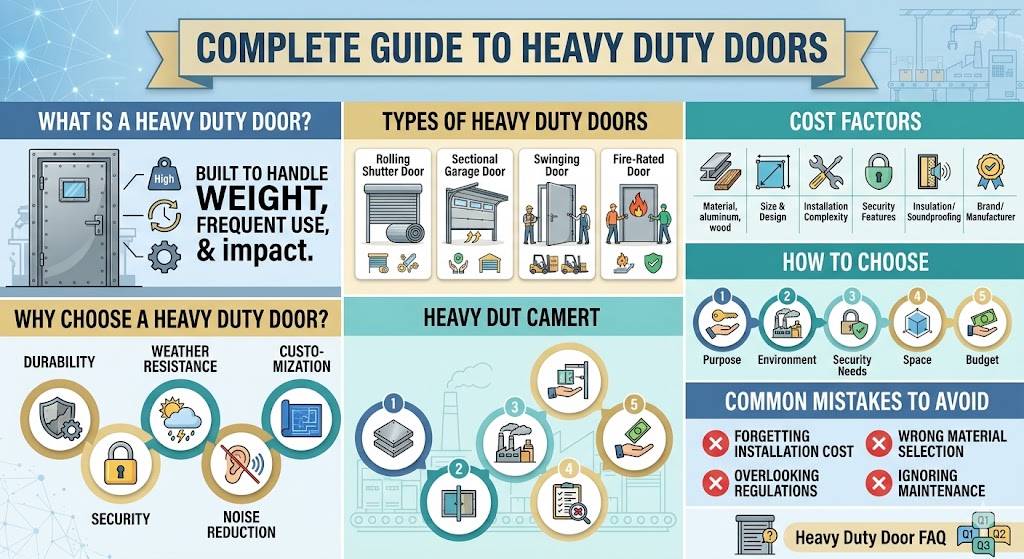
A heavy duty door is a door designed to handle substantial weight, frequent use, and harsh environments. These doors are typically constructed from materials like steel, aluminum, or reinforced wood to ensure durability and strength. They are often used in industrial, commercial, and high-security settings, where standard doors may not suffice due to their inability to withstand heavy impacts, wear, and tear.
Heavy duty doors are built to provide excellent security, soundproofing, and weather resistance. They come in various styles, from swinging doors to sliding or rolling shutters, depending on the intended use and location. The robust construction of these doors ensures they can withstand extreme conditions, such as heavy traffic, high winds, or even vandalism.
Why Choose a Heavy Duty Door?
The decision to invest in a heavy duty door often comes down to its ability to meet specific requirements that regular doors cannot. There are several compelling reasons why businesses, homeowners, and industrial operators choose these doors for their properties. Here are a few of the most significant advantages:
- Durability: Heavy duty doors are built to last, often withstanding years of use without significant wear. They are ideal for environments that experience high foot traffic or physical impacts.
- Security:These doors provide enhanced security features, making them ideal for warehouses, industrial facilities, or commercial properties. They are more difficult to break into compared to standard doors.
- Weather Resistance:Heavy duty doors are designed to withstand harsh weather conditions. They are commonly used in exterior applications, where resistance to wind, rain, and temperature fluctuations is important.
- Noise Reduction:Many heavy duty doors come with soundproofing properties, making them a great choice for offices or facilities where noise control is crucial.
- Customization:These doors are highly customizable to fit specific needs, from the material and color to the installation method. They can be tailored to match any architectural design or security requirement.
Factors Affecting the Cost of Heavy Duty Doors
The cost of a heavy duty door can vary significantly depending on several factors. Understanding these factors can help you make an informed decision when purchasing a door for your business or home. Here are the key factors that affect the cost:
- Material:The type of material used to construct the door will impact the price. Steel, aluminum, and reinforced wood are common choices, each with its own price point based on durability and weight.
- Size and Design: Larger doors or those with complex designs (e.g., custom windows, detailed finishes) will cost more. Standard sizes are typically more affordable than custom-built options.
- Installation Complexity: If the door requires a complex installation process or custom framing, the cost will increase. Difficult installations may require more labor or specialized equipment.
- Security Features:Doors with advanced security features such as electronic locking systems, bulletproof glass, or reinforced frames will cost more. These additional features are designed to enhance the security of the premises.
- Insulation and Soundproofing: Some heavy duty doors come with built-in insulation or soundproofing, which adds to the overall cost. These features are often included for specific applications like cold storage or offices requiring privacy.
- Brand and Manufacturer:Reputable brands and manufacturers may charge more for their products due to quality assurance, warranty, and customer service. However, they may offer longer-lasting and more reliable doors, which could be more cost-effective in the long run.
Types of Heavy Duty Doors
Heavy duty doors come in a wide variety of styles and configurations to suit different needs. Here are some of the most common types:
1. Rolling Shutter Doors
Rolling shutter doors are commonly used in commercial and industrial applications. These doors are made from durable metal slats that roll up into a compact coil, providing easy access while ensuring security. They are ideal for high-traffic areas or situations requiring both security and space-saving.
2. Sectional Garage Doors
Sectional garage doors are another popular choice for heavy-duty applications. These doors are made from several panels that move vertically along tracks, folding up into the ceiling of the garage. They are excellent for residential garages and warehouses where space efficiency is important.
3. Swinging Doors
Swinging doors are a traditional option commonly used in both commercial and industrial settings. These doors are hinged on one side and swing open and closed. They are often used for high-traffic areas or places that require frequent movement of people or equipment.
4. Fire-Rated Doors
Fire-rated heavy duty doors are designed to resist fire and smoke for a specific period, typically ranging from 30 to 90 minutes. These doors are critical in buildings where fire safety regulations are essential, providing a barrier to help prevent the spread of fire.
How to Choose the Right Heavy Duty Door for Your Needs
Choosing the right heavy duty door involves evaluating your specific needs and the environment in which the door will be installed. Here are some factors to consider:
- Purpose:What is the primary purpose of the door? Is it for security, noise reduction, weather resistance, or space-saving? Understanding the door’s purpose will help you choose the right type and features.
- Environment:Consider the environment where the door will be used. Will it be exposed to harsh weather, high traffic, or extreme temperatures? Ensure the material and design of the door are suitable for the conditions.
- Security Needs: If security is a priority, opt for doors with reinforced frames, advanced locking systems, or even bulletproof materials. Security doors may cost more but provide peace of mind.
- Space Requirements: Depending on the space available, you may need to choose between a swinging door, sectional door, or rolling shutter. Be sure to factor in clearance space and the need for storage when the door is open.
- Budget: Determine your budget for the door installation. Keep in mind that the cheapest option may not always be the most cost-effective in the long run. It’s better to invest in a durable, long-lasting door that meets your needs.
Common Mistakes to Avoid When Purchasing Heavy Duty Doors
When purchasing a heavy duty door, it’s easy to make mistakes that could result in costly repairs or replacements. Here are some common mistakes to avoid:
- Not considering the full cost of installation:Often, the cost of installation is not included in the initial price quote. Be sure to factor in labor, materials, and any additional features such as insulation or customization.
- Choosing the wrong material:Different materials offer varying levels of durability and resistance. Make sure to choose a material that is suited to your environment, whether it’s steel for high-security applications or aluminum for a lighter, corrosion-resistant door.
- Overlooking safety regulations: For commercial or industrial applications, you may need to adhere to local building codes and safety regulations. Make sure your door complies with fire ratings, impact resistance, and accessibility standards.
- Ignoring maintenance requirements: Heavy duty doors require regular maintenance to ensure they continue to function properly. Failing to schedule periodic inspections or cleanings can lead to premature wear and tear.
Heavy Duty Door FAQ
Q1: What is a heavy duty door?
A heavy duty door is a durable, strong door designed to withstand significant use, impacts, and extreme environmental conditions. It is commonly used in industrial, commercial, and high-security settings.
Q2: How do I choose the right heavy duty door?
Consider the door’s primary function, the environment in which it will be installed, security requirements, available space, and your budget to choose the best door for your needs.
Q3: What are the different types of heavy duty doors?
Heavy duty doors come in various types including rolling shutter doors, sectional garage doors, swinging doors, and fire-rated doors, each suited for different applications.